Essential Parts That Make Up Your Turntable

A turntable looks simple from across the room: a spinning record, a tonearm, and music pouring out of the speakers. Up close, it is a small mechanical system where every part has a job. A little vibration in the wrong place, a poorly aligned cartridge, or a worn stylus can change what you hear.
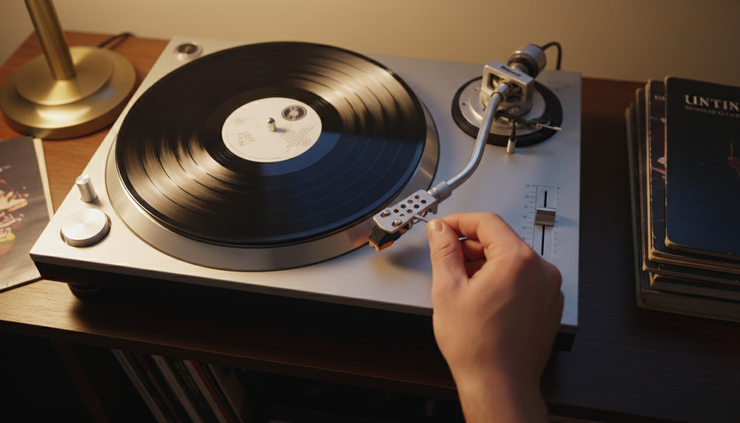
That is what makes turntables so satisfying. They are not mysterious once you know the parts. The plinth keeps things stable. The platter spins the record. The tonearm holds the cartridge at the right angle. The stylus traces the groove. A tiny electrical signal then travels through the phono stage and into the rest of the hi-fi system.
This guide breaks down the essential parts that make up your turntable, what each one does, and why each part matters for sound, reliability, and day-to-day use.

The main turntable parts work as one system
A turntable is not just a record spinner. It is a vibration control device, a speed control device, and a signal generator in one.
The job seems simple:
Spin the record at a steady speed.
Hold the stylus in the groove with the correct pressure.
Convert groove movement into an electrical signal.
Send that signal to amplification without adding noise.
Each part supports one of those tasks. If one part is weak, the whole system can suffer. A great cartridge will not save a wobbly platter. A heavy platter will not help much if the stylus is worn. A quiet phono preamp cannot fix poor grounding or bad cable routing.
Here is a quick map of the core parts.
Part | What it does | Why it matters |
Plinth | Supports the whole turntable | Controls vibration and keeps parts aligned |
Platter | Spins the record | Affects speed stability and resonance |
Mat | Sits between record and platter | Helps grip the record and manage vibration |
Motor | Drives the platter | Controls speed and noise |
Bearing | Lets the platter rotate smoothly | Reduces wobble, friction, and rumble |
Tonearm | Holds and guides the cartridge | Affects tracking and distortion |
Cartridge | Converts groove movement into signal | Shapes much of the sound character |
Stylus | Touches the record groove | Reads the music and affects record wear |
Phono stage | Boosts and equalises the signal | Makes the signal usable by an amplifier |
Cables and grounding | Carry the signal cleanly | Help prevent hum and noise |
The best way to understand a turntable is to follow the record from bottom to top, then follow the signal from the stylus to the speakers.
The plinth, platter, mat, motor, and bearing form the foundation
The lower half of a turntable does most of the quiet, unglamorous work. It keeps the record moving smoothly while fighting vibration from the room, speakers, motor, and even footsteps.
The plinth holds everything in place
The plinth is the base of the turntable. It supports the motor, platter bearing, tonearm, and controls. On some models it is a simple wooden, MDF, acrylic, or metal slab. On others, it is part of a more complex suspended design.
A good plinth does two things well:
It keeps the platter and tonearm in stable alignment.
It resists unwanted vibration.
That second job matters because a stylus cannot tell the difference between music and vibration. If energy reaches the stylus from the shelf, speakers, or motor, it can become low-level noise, muddiness, or feedback.
A heavier plinth is not always better. Heavy designs can absorb and damp vibration, but clever lightweight designs can also work well if they drain energy quickly. What matters is control. The plinth should feel solid, level, and free from rattles.
Placement matters too. A turntable on a shaky cabinet will struggle, no matter how good the plinth is. In compact homes, place it on a rigid surface away from subwoofers and speaker stands if possible. Wall shelves can help when floors transmit too much movement.
The platter supports and spins the record
The platter is the round platform under the record. It must spin at a steady speed, usually 33⅓ RPM for LPs and 45 RPM for singles. Some turntables also support 78 RPM for older shellac records, though those need a suitable stylus.
Platter material varies. Common types include:
Aluminium
Glass
Acrylic
MDF or resin composites
Die-cast metal
A heavier platter can improve speed stability because it has more rotational mass. Once moving, it resists tiny speed changes. This can help piano notes, sustained vocals, and long guitar chords sound more stable.
Material also affects resonance. A platter that rings like a bell can pass unwanted energy back into the record. That is why the platter often works together with a mat.
The mat changes how the record meets the platter
The mat sits between the platter and the record. It grips the vinyl, protects it from hard surfaces, and helps manage vibration.
Common mat materials include felt, rubber, cork, leather, and acrylic. Each has a slightly different feel.
Felt mats are light and common. They make record handling easy, though they can attract dust or static. Rubber mats grip well and add damping, but can sound a little heavy on some turntables. Cork sits somewhere in between and often helps with static. Acrylic platters sometimes work best with no mat because the record couples directly to a similar material.
A mat also affects height. Changing to a much thicker or thinner mat can alter the tonearm angle. That angle can affect tracking and tonal balance, especially with sensitive cartridges. If a mat swap makes the sound brighter, duller, or less focused, the tonearm height may need adjustment if the turntable allows it.

The motor keeps the speed steady
The motor turns the platter. Its quality affects speed accuracy, pitch stability, and mechanical noise.
Most home turntables use one of two drive systems.
Belt drive
A rubber belt connects the motor to the platter or sub-platter. This helps isolate motor vibration from the record. Belt-drive turntables are common in home hi-fi because they can be quiet and simple.
Direct drive
The platter is part of the motor system. This gives strong torque and fast start-up. Direct-drive models are common in DJ use, though many hi-fi designs also use direct drive very well.
Neither type is automatically better. A well-made belt-drive turntable can outperform a poor direct-drive design, and a well-made direct-drive turntable can be very quiet and stable.
With belt-drive models, the belt is a wear item. Over time, it can stretch, harden, slip, or leave residue. If records sound slightly slow, start-up feels weak, or the platter takes longer to reach speed, the belt may need replacing.
With direct-drive models, speed control depends more on the motor system and electronics. Good designs keep rotation smooth, not just accurate on average.
The bearing lets the platter rotate cleanly
The main bearing sits under the platter or sub-platter. It lets the platter spin with minimal friction and wobble. It is one of the most important parts of the foundation, yet it is often hidden.
A poor bearing can cause rumble, uneven rotation, or tiny vertical movements. Those problems can affect bass definition and background quietness.
Signs that a bearing may need attention include:
Scraping or grinding sounds when the platter turns by hand
Visible wobble while spinning
Oil leakage on designs that use bearing oil
Unusual resistance when starting the platter
Many turntables need little bearing maintenance, while some require occasional oiling with the correct lubricant. The manual should always take priority. Using the wrong oil can attract dirt or damage parts.
The tonearm and cartridge read the record groove
The top half of the turntable handles the most delicate work. A vinyl groove is tiny, and the stylus has to follow it with precision while the record spins under it. That requires the right tonearm geometry, tracking force, anti-skate, cartridge alignment, and stylus condition.
The tonearm holds the cartridge at the right angle
The tonearm is the arm that carries the cartridge across the record. It must move freely from the outer groove to the inner groove while holding the stylus at the correct pressure and angle.
A good tonearm should:
Move smoothly with little friction
Resist unwanted resonance
Keep the cartridge aligned
Allow accurate tracking force adjustment
Provide anti-skate adjustment on many designs
Tonearms come in different shapes. Straight arms and S-shaped arms are both common. The shape alone does not decide quality. What matters is the arm’s effective mass, bearing quality, rigidity, and cartridge match.
Effective mass is a key idea. Some tonearms are lighter, some are heavier. Cartridges also have different compliance, which is a measure of how springy the stylus suspension is. A good match helps the stylus track cleanly. A poor match can make the arm and cartridge resonate in a way that affects bass, tracking, or record wear.
Most listeners do not need to calculate this in detail for an entry-level setup. If using the cartridge supplied with the turntable, the manufacturer has usually chosen a workable match. If upgrading, cartridge compatibility becomes more important.
The counterweight sets tracking force
The counterweight sits at the back of the tonearm. It balances the arm and sets vertical tracking force, which is the downward pressure of the stylus on the record.
Tracking force is usually measured in grams. Each cartridge has a recommended range. Too little force sounds safer, but it can be worse for records because the stylus may mistrack and chatter in the groove. Too much force can also increase wear and dull the sound.
Setting tracking force properly is one of the simplest ways to improve vinyl playback. Many tonearms have markings on the counterweight, but a small digital stylus gauge gives more confidence. It is a useful tool if records matter to you.
Anti-skate helps the stylus sit evenly in the groove
As a record spins, friction pulls the tonearm slightly towards the centre. Anti-skate applies a small outward force to balance that pull.
When anti-skate is wrong, one side of the groove wall can carry more pressure than the other. This can cause uneven wear, channel imbalance, or distortion, especially near the inner grooves.
Anti-skate settings are not always exact. A common starting point is to match anti-skate roughly to tracking force, then fine-tune if the turntable manual suggests a method. If voices or cymbals distort more in one channel, anti-skate and alignment are worth checking.
The headshell connects arm and cartridge
The headshell is the part at the front of the tonearm that holds the cartridge. Some tonearms have a fixed headshell. Others use a removable one, often with an SME-style connector.
A removable headshell makes cartridge changes easier. It is popular with DJ turntables and useful for listeners who switch between cartridges. For example, one headshell might hold a cartridge for LPs, while another holds a cartridge suited to older mono records.
The trade-off is that the connector adds another mechanical and electrical joint. Good designs handle this well, but loose contacts or poor mounting can cause hum, channel dropouts, or tracking issues.
The cartridge turns movement into music
The cartridge is the small generator at the end of the tonearm. It converts stylus movement into an electrical signal. This is one of the most important turntable parts for sound character.
There are two main cartridge types in common home use.
Moving magnet cartridges are common, practical, and usually easier to match with standard phono inputs. They tend to have higher output, and many allow stylus replacement without changing the whole cartridge.
Moving coil cartridges often have lower output and may need a compatible phono stage or step-up device. Many are valued for detail and speed, but stylus replacement is usually more complex because the cartridge often needs professional retipping or replacement.
A cartridge affects tonal balance, detail, tracking ability, and surface noise. Still, it cannot work well without proper alignment. Even a fine cartridge can sound harsh or dull if it sits crooked in the headshell.

The stylus is the only part that touches the record
The stylus, often called the needle, is the tiny tip that rides in the groove. It is usually made from diamond because diamond is extremely hard and durable.
Stylus shape affects how it contacts the groove. Common shapes include conical, elliptical, and more advanced line-contact profiles. A basic conical stylus can be forgiving and durable. An elliptical stylus reads more detail. Advanced profiles can trace high frequencies and inner grooves very well, but they need careful alignment.
A worn stylus can damage records. It may also cause distortion, sibilance, dull treble, or fuzzy vocals. Stylus life varies by type, record cleanliness, tracking force, and care. Rather than relying only on hours, listen for changes and inspect when possible.
Good stylus habits are simple:
Clean records before playing.
Use a stylus brush in the correct direction, usually back to front.
Avoid touching the stylus with your fingers.
Lower the cueing lever gently.
Replace the stylus when wear becomes likely or audible.
The stylus handles the most physical contact in the system. Treat it gently and it will reward you with cleaner playback and less record wear.
The signal path needs clean gain and good connections
Once the stylus moves, the cartridge produces a very small electrical signal. That signal is far weaker than a typical line-level source like a CD player, streamer, or phone output. It also needs special equalisation before it sounds right.
This is where the phono stage, cables, grounding, amplifier, and speakers come in.
The phono stage boosts and equalises the signal
A phono stage, also called a phono preamp, does two jobs.
It adds gain so the tiny cartridge signal becomes strong enough for an amplifier. It also applies RIAA equalisation. Records are cut with reduced bass and boosted treble to make the groove easier to track and fit more music on each side. The phono stage reverses that curve during playback.
Without a phono stage, the turntable will sound quiet, thin, and bright when plugged into a normal line input.
Some turntables have a built-in phono preamp. Some amplifiers have a phono input. Some systems use a separate phono stage. Each approach can work.
A built-in phono stage is convenient and tidy. It is common on beginner-friendly turntables and powered speaker setups. A separate phono stage gives more upgrade options and may offer better noise control or cartridge matching.
Check whether the phono stage supports your cartridge type. A moving magnet input suits most MM cartridges. Low-output moving coil cartridges need more gain and different loading options.
The amplifier and speakers reveal the turntable’s performance
The turntable does not work alone. The amplifier and speakers shape what you hear. A warm-sounding speaker can soften a bright cartridge. A revealing speaker can make alignment problems obvious.
This is why the “best” upgrade is not always the most expensive cartridge. If the turntable sits on a shaky surface, isolation may help more. If there is hum, grounding matters more. If the stylus is old, replacing it comes before changing speakers.
Think of the system as a chain. The turntable starts the signal. Every part after it either preserves or loses information.
The cables carry a very small signal
Turntable cables matter because the cartridge signal is so low. Poor shielding, loose plugs, or long cable runs can add hum or dull the sound.
Many turntables have fixed RCA cables. Others allow cable upgrades. Keep phono cables reasonably short, and avoid running them tightly alongside power cables.
Some cartridges and phono stages are sensitive to cable capacitance. This is more common with moving magnet cartridges. Too much capacitance can alter high-frequency response. In plain terms, the sound may become brighter, sharper, or less natural. You do not need to obsess over this with a basic setup, but it matters when fine-tuning.
Grounding helps reduce hum
Many turntables include a small ground wire. It usually connects from the turntable to a ground terminal on the amplifier or phono stage.
If you hear a steady hum that gets louder when the volume rises, check the ground wire. Also check that RCA plugs sit firmly and that the cartridge clips are secure.
Hum can come from several sources:
Missing or loose ground connection
Poorly shielded cables
Power supplies placed too close to the cartridge or phono stage
Dirty headshell contacts
Faulty internal wiring
Do not assume hum is normal. A properly set up turntable can be very quiet between tracks, apart from the natural surface noise of the record itself.
The setup parts affect tracking, speed, and daily use
Some parts do not seem musical at first glance. The cueing lever, feet, dust cover, speed controls, and power supply feel practical. Yet they affect how easy the turntable is to use and how well it performs over time.
The cueing lever protects records and stylus tips
The cueing lever raises and lowers the tonearm. It uses a damped mechanism so the stylus lands gently in the groove.
This small part prevents many accidents. Lowering a tonearm by hand can work, but a slip may drag the stylus across the record. A smooth cueing lever gives better control, especially in low light or after handling record sleeves.
If the arm drops too quickly, the cueing mechanism may need service. Some designs use silicone damping fluid, which can dry or leak over time.
The feet isolate the turntable from the room
The feet support the plinth and help isolate it from furniture and floor vibration. Some are simple rubber feet. Others use springs, sorbothane-like materials, spikes, or adjustable threaded supports.
Adjustable feet help level the turntable. This matters because the platter and tonearm should sit level for consistent tracking. Use a small spirit level on the platter, not on the dust cover.
In homes with suspended floors or strong bass from nearby speakers, isolation becomes more important. If the sound becomes boomy when the volume rises, or if the stylus skips when someone walks past, the turntable is picking up vibration. Better placement, a wall shelf, or isolation feet may help.
The dust cover protects, but it can also resonate
The dust cover keeps dust away from the platter, tonearm, and record surface. In humid climates, it also helps reduce the amount of airborne dirt settling on parts between listening sessions.
During playback, opinions differ. Some listeners keep the cover down to protect the record. Others remove it or leave it open because a hinged plastic cover can catch airborne vibration from the speakers.
There is no single rule for every setup. Try playing a familiar record with the cover down, open, and removed if possible. If the sound becomes cleaner or less boomy with the cover open or off, vibration was likely part of the issue.
The speed controls select the correct record speed
Most records play at 33⅓ or 45 RPM. The speed selector changes between them. Some turntables do this electronically with a switch. Others require moving the belt on the motor pulley.
Electronic switching is convenient. Manual belt changes are simple and can keep the design minimal, but they are less convenient if you play many 45 RPM records.
Speed accuracy matters. If the turntable runs fast, music sounds sharper and more energetic than intended. If it runs slow, it sounds dull or heavy. Some turntables include pitch control, mostly on DJ-style models. Others rely on fixed speed regulation.
A phone speed app can give a rough check, but it adds the weight of the phone to the platter, so it is not perfect. A strobe disc with the correct light source can be useful for checking speed more directly.
The power supply feeds the motor
The power supply provides electricity to the motor and control circuit. Some turntables use an internal supply. Others use an external power adapter or separate power box.
A good power supply helps the motor run consistently and keeps electrical noise away from the cartridge signal. With some turntables, upgrading the external power supply can improve speed stability, but this depends on the design. It is not a universal fix.
Keep power adapters and power strips away from the phono stage and cartridge area where possible. The signal at the cartridge is tiny, so nearby electrical fields can sometimes add noise.
Automatic mechanisms add convenience
Some turntables are fully manual. You move the tonearm to the record and lift it at the end. Others are semi-automatic or fully automatic.
A semi-automatic turntable may lift the arm at the end of the side. A fully automatic model can start playback and return the arm at the press of a button.
Automatic features are useful if you like convenience or often forget to lift the stylus at the end of a record. The trade-off is complexity. More moving parts can mean more maintenance over time.
Manual turntables are simple and often favoured in hi-fi designs. Automatic turntables can still sound good, especially when well maintained. Choose based on how you listen, not on purist rules.
Maintenance keeps every part working properly
A turntable does not need constant fussing, but it does reward basic care. Regular maintenance protects records, reduces noise, and keeps the mechanical parts working as intended.
Keep records and the stylus clean
Dust is the enemy of quiet playback. A dusty record causes crackle and can push debris onto the stylus. That debris can reduce detail and increase wear.
Use a carbon fibre record brush before playback. For dirty used records, a proper wet cleaning method works better. Let records dry fully before putting them back into sleeves.
Clean the stylus with a suitable stylus brush or cleaner. Always follow the cartridge maker’s instructions. Brushing in the wrong direction can damage the cantilever.
Check alignment after cartridge changes
Whenever you install or replace a cartridge, alignment matters. The cartridge must sit at the correct angle and position so the stylus follows the groove with low distortion.
The main setup points are:
Tracking force
Cartridge overhang
Cartridge offset angle
Azimuth, where adjustable
Vertical tracking angle, where adjustable
Anti-skate
A simple alignment protractor can help. Many turntables include a gauge or specify a measurement in the manual. Take your time. Small errors can show up as sibilance, inner-groove distortion, or uneven channel balance.
Replace wear items before they cause problems
Several turntable parts wear over time. The stylus is the obvious one, but it is not the only one.
Watch these parts:
Stylus
Drive belt
Mat
Headshell leads
RCA plugs
Cueing mechanism
Bearing oil, on designs that require it
A worn belt may cause speed issues. Oxidised headshell contacts may cause channel dropouts. A hardened mat may lose grip. None of these parts is dramatic on its own, but each can reduce performance.
Store the turntable well
Keep the turntable level, dry, and away from direct sunlight. Heat can affect belts, mats, and dust covers. Humidity can encourage mould on record sleeves if storage is poor, so airflow matters.
When not in use, lock the tonearm if the turntable has an arm clip. Put on the stylus guard if you are cleaning around the deck or moving it. Remove the platter on many models before transport, since a heavy platter can damage the bearing if the turntable is carried carelessly.

A good turntable is a balance of small details
A turntable works because many parts behave well at the same time. The platter must spin smoothly. The bearing must stay quiet. The tonearm must move freely. The cartridge must sit in alignment. The stylus must be clean and unworn. The phono stage must add gain without adding hum.
That is the charm of vinyl playback. It is physical, precise, and easy to improve once you understand the parts.
If the sound feels off, start with the basics before buying upgrades. Level the turntable. Check tracking force. Clean the stylus. Confirm the ground wire. Make sure the belt is healthy. These simple checks often bring more improvement than changing a major component at random.
Know what each part does, and the turntable stops being a black box. It becomes a system you can set up, care for, and enjoy with confidence.


Comments